


Markets Served
Whatever You Ship
We’ve Engineered the Rail to Move It
From grain elevators to chemical terminals, Via Rail Engineering designs for the operational realities of every commodity that moves by rail.
Every industry that ships by rail has its own equipment, its own safety considerations, and its own definition of what a “good” rail facility actually looks like. A grain elevator and a chemical plant might both need a siding, but they need almost nothing else the same way. Via Rail Engineering designs around those differences instead of treating every facility like a generic rail spur, which is why we work across as many commodities and industries as we do.
Rail Engineering Experience Across the Industries We Serve

Aggregates
Aggregates operations, quarries, mines, and crushed stone facilities move heavy, high-volume bulk material, which means track designed for sustained heavy axle loads and car spotting that keeps loading and unloading cycles moving without unnecessary switching.
We design aggregates infrastructure around the loading and unloading equipment already in use on site, not a generic template, so the track supports the operation instead of constraining it. From quarry loadouts and stockpile access to processing facilities and distribution terminals, we help ensure rail infrastructure supports the movement of large volumes safely and efficiently.
Agriculture
Grain elevators, fertilizer terminals, and feed operations deal with seasonal volume swings, which makes car indexers and loop-track configurations valuable for moving strings of cars through loading without constant locomotive switching.
Agricultural facilities also often need to handle significant seasonal fluctuations in rail traffic, making yard capacity, car staging, and efficient loading operations critical to maintaining throughput during peak shipping periods.
Our work for Country Visions Cooperative in Plymouth, Wisconsin included a four-track yard designed specifically for agricultural staging, loading, and drop-and-pull operations along the Wisconsin & Southern Railroad.
Chemicals
Chemical plants, plastics producers, and propane or LPG terminals require unloading manifolds and facility layouts engineered around strict safety clearances, since the consequences of a design mistake here are more serious than in most other industries.
We’ve designed rail infrastructure for plastics manufacturers including Alliance Plastics in Wrightstown, Wisconsin, and M&M Industries in Lordstown, Ohio, where a dedicated spur was engineered specifically to handle covered hopper railcars carrying plastic pellets.
Energy
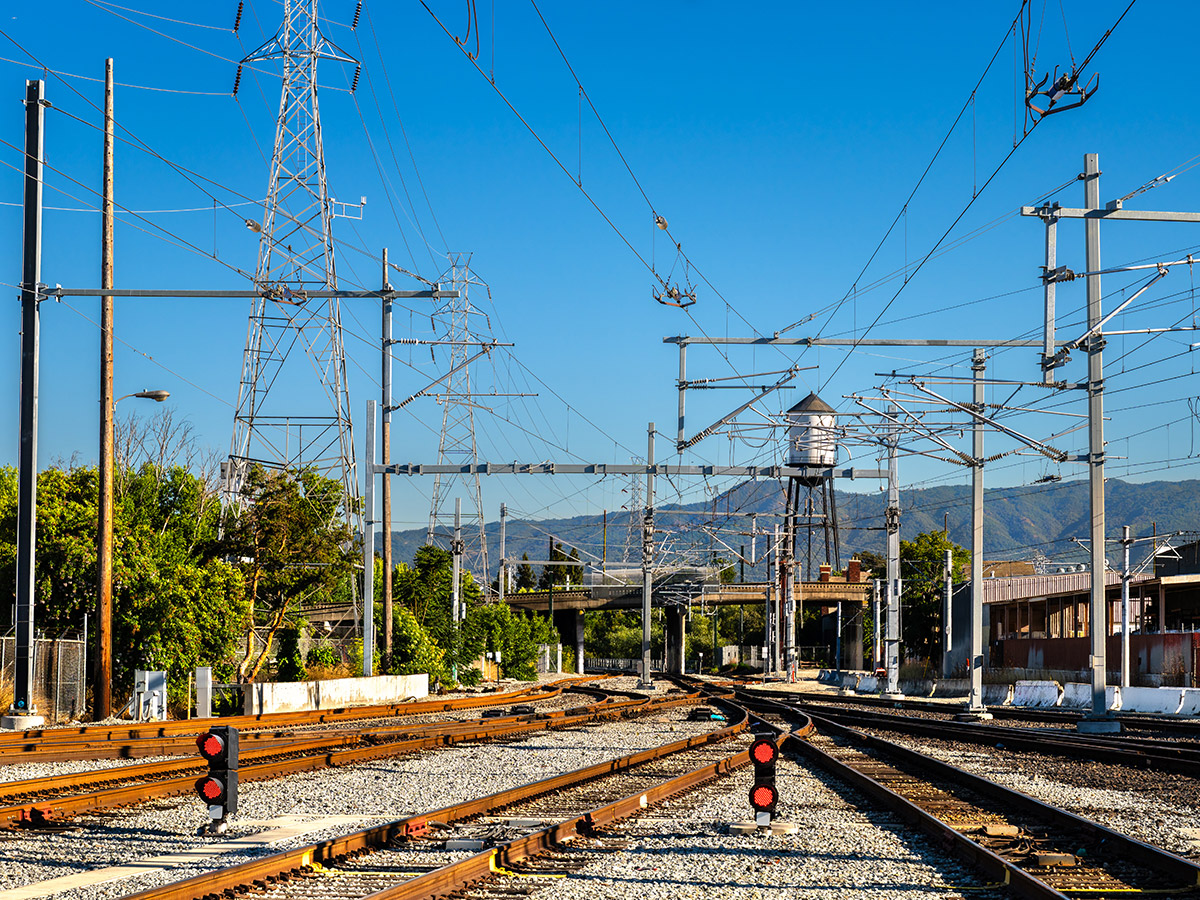
Biofuel, ethanol, petroleum, and wind-component distribution facilities often move product in unit trains, which puts a premium on outbound loading efficiency and track designed to keep a long string of cars moving without unnecessary delay.
Unit train facilities live or die on how efficiently cars load and clear, and that’s the standard we design every energy-sector facility against. Whether supporting ethanol production, petroleum distribution, renewable fuels, or wind-energy supply chains, our goal is to create infrastructure that supports reliable, high-volume freight movement.
Warehousing & Distribution
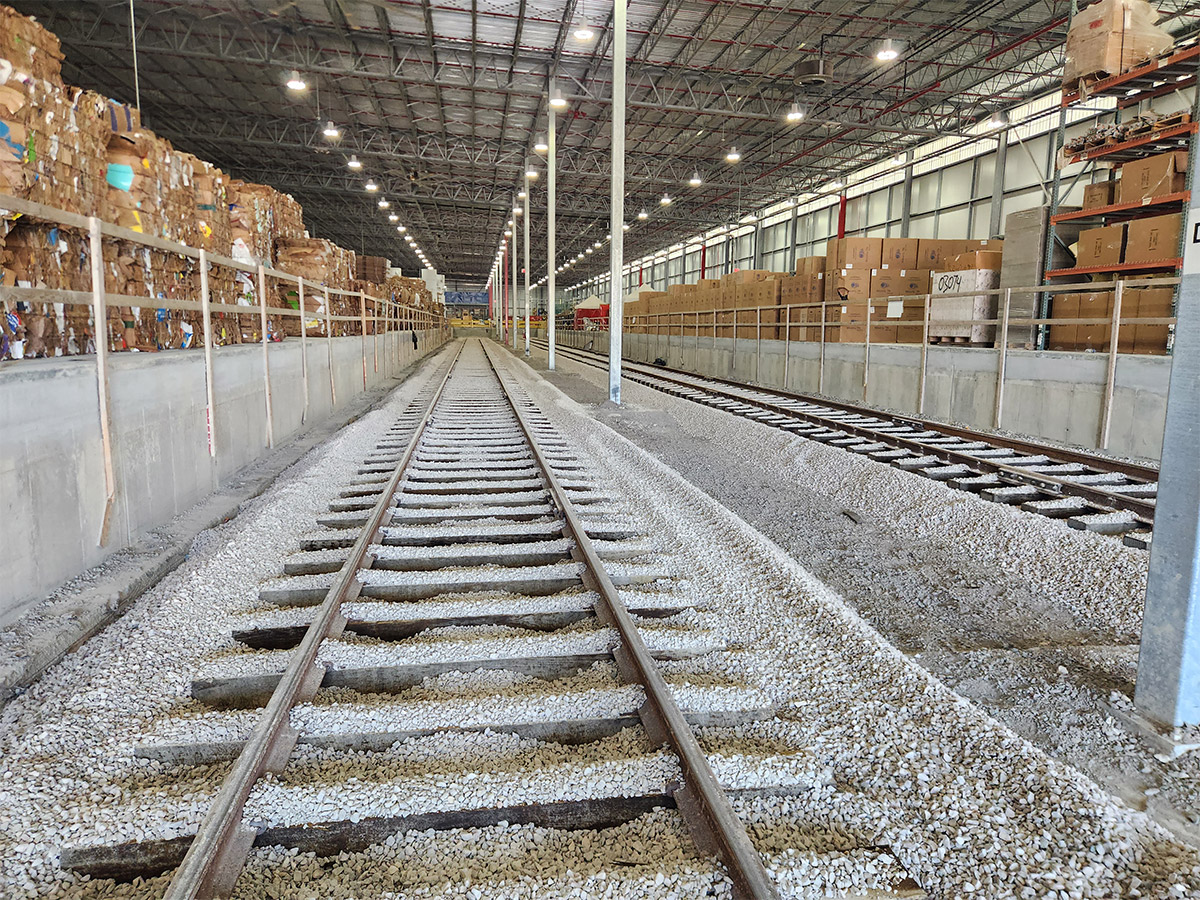
Rail-served distribution centers and logistics parks need spot track and loading dock integration that works alongside, not against, the truck circulation and warehouse operations already happening on site.
We designed dedicated rail infrastructure for NorthPoint Development’s distribution facility in Warren, Michigan, including separate service tracks for boxcar and centerbeam railcar operations, and rehabilitated rail access for Lowe’s Companies’ distribution facility in Palmetto, Georgia.
Manufacturing
Steel, automotive, and heavy industrial manufacturers need in-plant track integrated with the production line itself, where rail access has to support an operation rather than just terminate near it.
We’ve designed rail infrastructure for active manufacturing facilities including Reynolds Presto Products in Waupaca, Wisconsin, Nestlé USA in Little Chute, Wisconsin, and Tyson Fresh Meats in Hillsdale, Illinois, each engineered to keep production running throughout construction.
Transload
Bulk and break-bulk transload facilities exist specifically to move product between rail and truck, which makes the interchange itself, how efficiently freight crosses from one mode to the other, the most important part of the layout.
We design transload facilities around the interchange, not just the track leading up to it, since that’s where most operational bottlenecks actually happen. Site circulation, truck access, material handling equipment, storage areas, and rail operations all need to work together to keep freight moving efficiently between transportation modes.
Industrial Parks
Multi-tenant industrial parks need rail planned at the scale of the whole development, not just one building, since track, roads, and phasing all have to work together for tenants who haven’t signed a lease yet.
Palladio Industries’ rail facility at Central Pointe Rail Park in Temple, Texas was designed as one tenant within a larger rail-served park, with future expansion tracks already preserved in the plan.
Intermodal
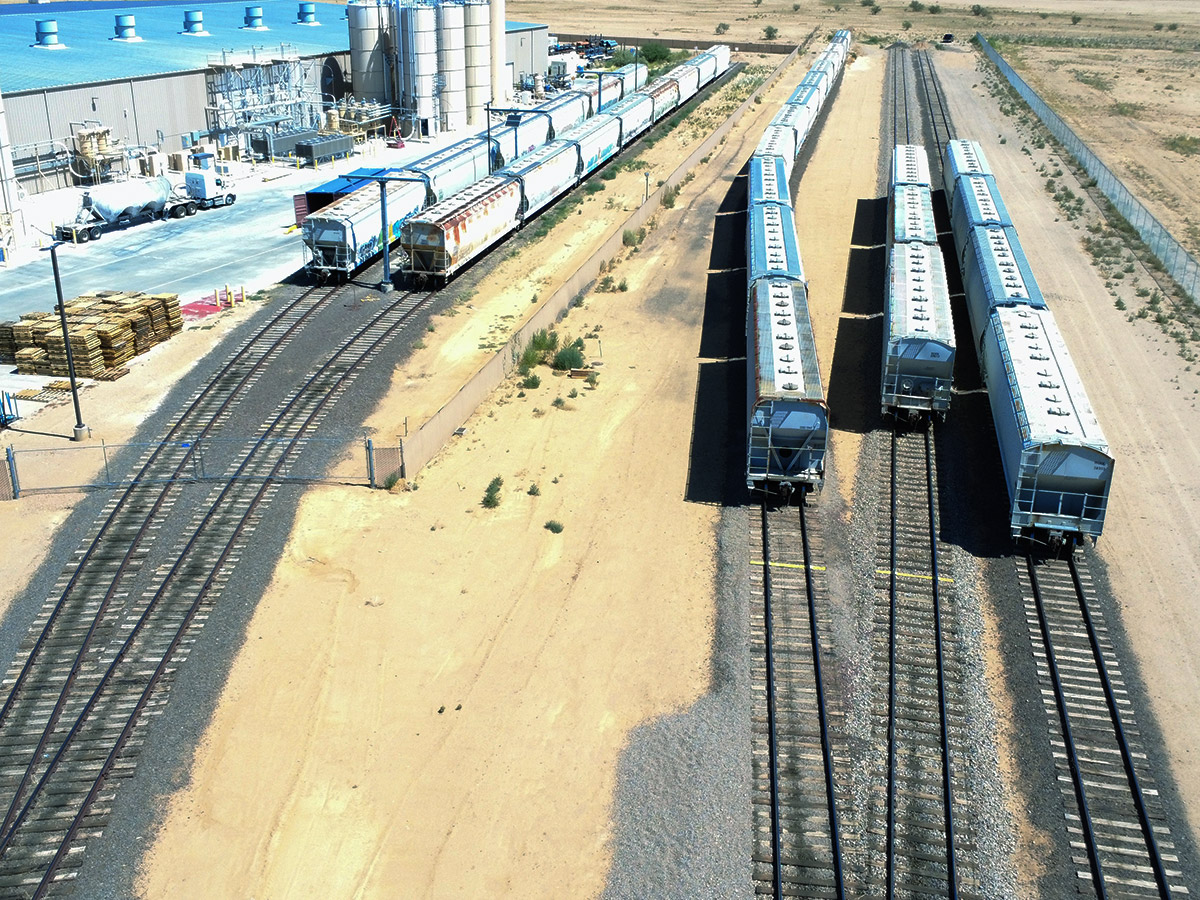
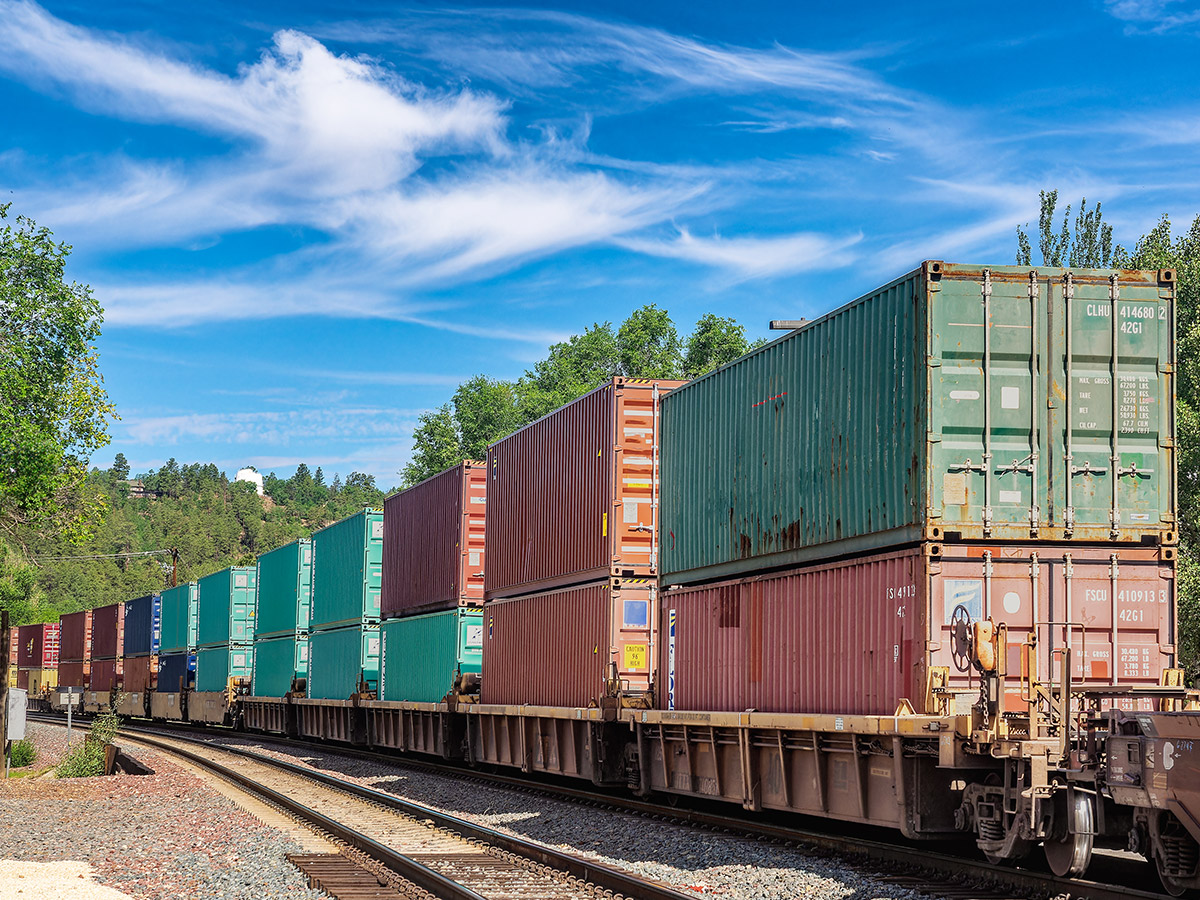
Container and trailer handling facilities depend on high-throughput operations, which means track and yard design built around moving equipment quickly rather than storing it.
Intermodal facilities get judged on throughput, not just capacity, and that’s the lens we design through. We evaluate track layouts, loading areas, circulation patterns, and equipment access to help support efficient container and trailer movement while minimizing operational conflicts within the facility.
Specialty Freight
Oversized loads, hazmat shipments, and project cargo each come with their own handling requirements, which means a specialty freight facility is rarely a smaller version of a standard rail siding, it’s its own design problem.
Specialty freight rarely fits a standard template, and we design each facility around the specific cargo it needs to handle rather than forcing it into a generic layout.
Don’t See Your Industry?
We’ve Probably Worked In It
Let’s talk about what your operation actually needs.